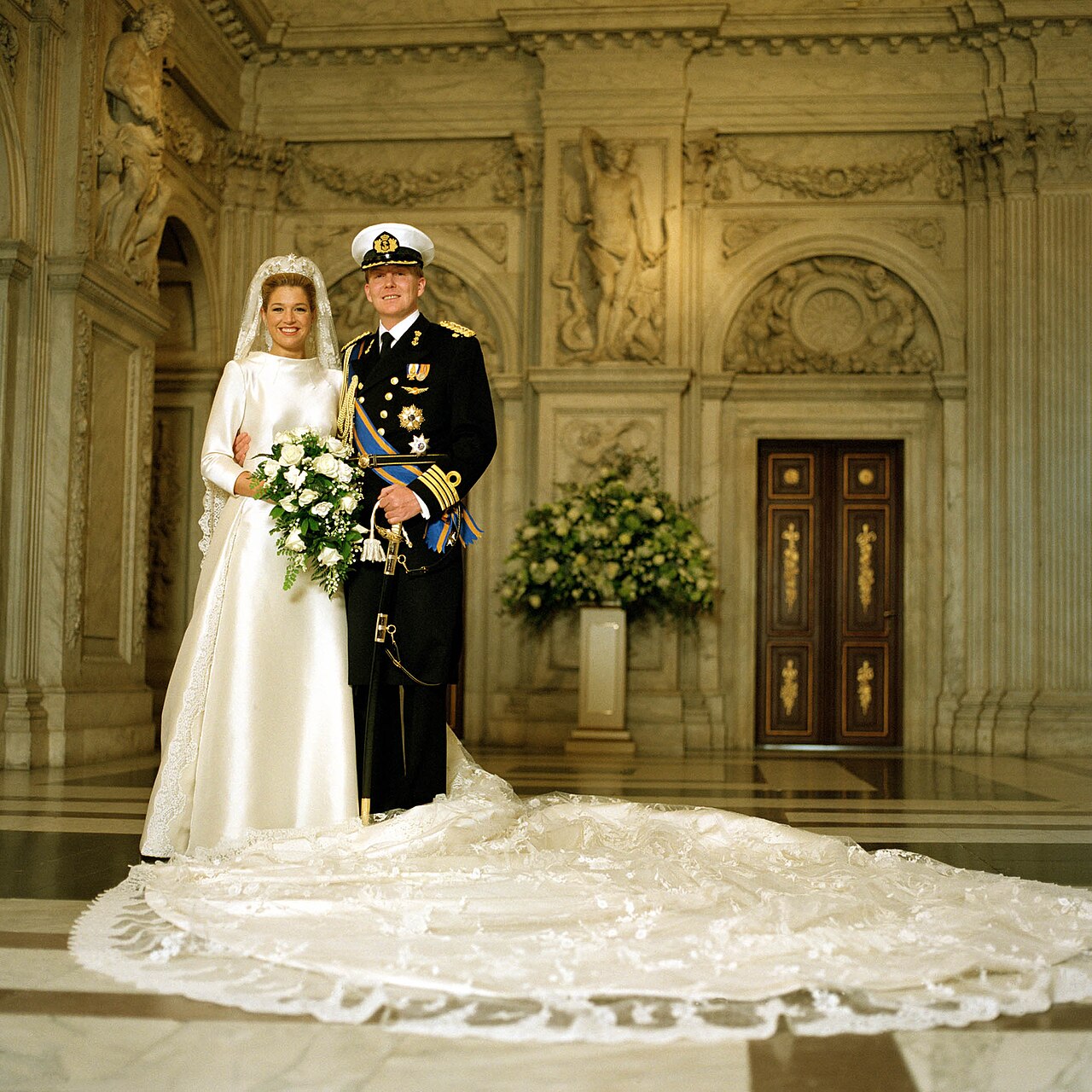
The marriage of Willem-Alexander, then Crown Prince of the Netherlands, to the Argentinian Máxima Zorreguieta on February 2, 2002, was a day of grand celebration and immense public interest. Yet, amidst the pomp and splendor, a profound undercurrent of sadness flowed, visibly manifesting in a single, poignant tear that famously rolled down Máxima's cheek. This tear, captured by cameras worldwide, was not merely an expression of joy or overwhelm; it symbolized the deep personal sacrifice at the heart of the royal wedding. Two crucial figures were conspicuously absent from the momentous occasion: Máxima's parents, Jorge Zorreguieta and María del Carmen Cerruti. Their absence, particularly that of her mother, raised many questions, especially in the Dutch-speaking world, where queries like "Was Maxima Haar Moeder Op De Bruiloft?" frequently arose.
The Iconic Tear and a Missing Piece of Máxima's Heart
February 2, 2002, was a day of striking contrasts. The Nieuwe Kerk in Amsterdam was filled with dignitaries, royals from across the globe, and the joyous anticipation of a nation. Máxima, radiant in a Valentino gown, seemed the epitome of happiness. However, a moment arrived during the performance of Astor Piazzolla’s “Adiós Nonino” by Carel Kraayenhof on the bandoneon that revealed the depth of her emotional world. As the melancholic, soulful notes filled the church, a single tear traced a path down her cheek. It was a raw, unfiltered display of emotion that resonated deeply with millions.
This tear was not just for the beauty of the music; it was a profound acknowledgement of what was missing. "Adiós Nonino" itself, a tribute to Piazzolla's deceased father, became a powerful, albeit unintended, elegy for Máxima's own unseen Argentine roots at the ceremony. Her parents, who should have been standing proudly beside her, were thousands of miles away. This deliberate absence, a decision born out of complex political and historical circumstances, cast a long shadow over the otherwise jubilant event, leaving a poignant mark on the memory of the Dutch royal wedding.
The Weight of History: Why Jorge Zorreguieta Couldn't Attend
The primary reason for the absence of Máxima's parents stemmed from the controversial past of her father, Jorge Zorreguieta. During the harrowing period of Argentina's military dictatorship (1976-1983) led by General Jorge Videla, Zorreguieta served as Minister of Agriculture. This regime is infamous for the "Dirty War," a brutal campaign of state-sponsored terrorism that led to the disappearance, torture, and murder of an estimated 30,000 people.
While Jorge Zorreguieta consistently denied any knowledge of the atrocities committed during his tenure, many human rights organizations and segments of the Dutch public and political establishment found his involvement unacceptable. As Máxima's engagement to Prince Willem-Alexander was announced, a significant conflict erupted within the Netherlands. Then-Prime Minister Wim Kok, along with the Dutch parliament, took a firm stance: Jorge Zorreguieta's presence at the royal wedding was politically untenable due to his association with such a repressive regime. The parliament's approval of the marriage was contingent on his agreement not to attend.
This decision, though necessary for the wedding to proceed, was "extraordinarily painful" for the Royal Family, as Queen Beatrix herself expressed. Máxima addressed the controversy head-on during her engagement press conference in 2001, stating, "What happened during that period in Argentina is terrible. I have long rejected the Videla dictatorship. The disappearances, the torture, the murders, and all the terrible facts from that time. Therefore, I understand the great concerns that Dutch people have about a difficult period in my country." Regarding her father, she added, "I regret that he did his best for agriculture in a wrong regime. He had the best intentions, and I believe him. My father is, and will always remain, the honest and dedicated father who was always there for me... He is prepared not to be present at our wedding. However painful this is for our family." For a deeper dive into this political turmoil, read our article: Why Máxima's Parents Were Absent from Her Royal Wedding.
Was Maxima Haar Moeder Op De Bruiloft? Unpacking María del Carmen Cerruti's Absence
The question, "Was Maxima Haar Moeder Op De Bruiloft?" often arises, and the answer is no, Máxima's mother, María del Carmen Cerruti, was also not present at the royal wedding. While her mother's past was not directly linked to the Videla regime in the same way as her father's, her absence was a direct consequence of the difficult decision made regarding Jorge Zorreguieta.
There are several compelling reasons why María del Carmen Cerruti would have chosen not to attend, or why her presence without her husband would have been unthinkable for the family:
- Solidarity with Her Husband: It is highly likely that María del Carmen Cerruti chose not to attend out of solidarity with her husband. For a couple to celebrate their daughter's most significant day separately, especially under such emotionally charged circumstances, would have been profoundly difficult and culturally unusual.
- Emotional Strain: The entire situation was incredibly taxing for the Zorreguieta family. Attending a royal wedding without her husband, knowing the controversy swirling around their family, would have placed an immense emotional burden on Máxima's mother. The joy of the occasion would have been overshadowed by personal grief and public scrutiny.
- Family Unit: In many cultures, the parents of the bride attend as a united front. To have one parent present while the other was excluded would have highlighted the painful compromise even further. The family likely made a collective decision for both parents to remain absent to preserve their unity and support Máxima, however heartbreaking that choice was.
Máxima's biographer, Marcia Luyten, revealed the extent of Máxima's pain, stating that "The evening before her wedding, she did not stop crying. It was an enormous sacrifice for her." The absence of both parents, especially her mother, amplified this sacrifice. It meant Máxima navigated this monumental life event without the immediate, tangible support of her closest family, forcing her to rely on her own strength and the understanding of her new Dutch family. This collective decision, while protecting the monarchy from political fallout, undoubtedly inflicted a deep personal wound. For more on this specific aspect, refer to: The Controversial Reason Máxima's Mother Missed Her Wedding.
Sacrifice and Steadfast Love: Máxima's Unwavering Resolve
Máxima's decision to proceed with the marriage, knowing the profound personal cost, speaks volumes about her character and her commitment to her new role. She demonstrated immense strength, maturity, and a deep understanding of the historical sensitivities involved. Her public statement, unequivocally condemning the dictatorship while defending her father's intentions, was a masterclass in diplomacy and personal integrity.
Queen Beatrix, reflecting on this period in a 2005 interview, acknowledged the immense difficulty, especially for her future daughter-in-law. She remarked, "I cannot imagine that it was easy, certainly not for my daughter-in-law who joined our family. New country, new family – I believe that anyone who joins a new family has some difficulty with that." For Máxima, this typical adjustment was compounded by an unparalleled sacrifice.
The royal wedding became a powerful symbol of the intricate balance between personal happiness and public duty. Máxima's ability to navigate such a sensitive situation with grace and resilience not only garnered her respect but also endeared her to the Dutch people. It showed a woman capable of profound empathy, personal strength, and an unwavering commitment to her adopted nation, even when it meant enduring significant personal pain.
Enduring Legacy: A Royal Wedding Etched in Memory
The 2002 royal wedding remains one of the most memorable in modern European history, not just for its splendor but for its profound human drama. Máxima's tear, the absence of her parents, and the surrounding political controversy cemented her image as a compassionate, relatable, and remarkably strong future queen. This difficult start arguably forged her character in the public eye, showcasing her ability to handle immense pressure with grace and dignity.
The event also served as a stark reminder of how historical events can cast long shadows, impacting even the most personal moments of public figures. It highlighted the stringent moral and ethical standards expected of those entering a royal household, especially within a constitutional monarchy. Máxima's journey from an Argentinian economist to a beloved queen consort is a testament to her resilience, her ability to embrace a new culture, and her unwavering dedication to her family, both birth and royal.
The "Máxima tear" during "Adiós Nonino" became more than just a moment of sadness; it was a powerful expression of identity, sacrifice, and the universal human experience of navigating joy alongside profound sorrow. It ensured that her parents' absence, and particularly the answer to "Was Maxima Haar Moeder Op De Bruiloft?", would remain a poignant, unforgettable detail of her remarkable story.
The absence of Máxima's parents from her royal wedding was a deeply painful and politically charged decision, impacting not only Máxima herself but also her entire family. While her father, Jorge Zorreguieta, was explicitly excluded due to his controversial past, her mother, María del Carmen Cerruti, was also not present, likely out of solidarity and to spare the family further emotional distress. Máxima's tearful moment underscored the immense personal sacrifice she made for her royal destiny, ultimately endearing her to a nation and solidifying her reputation as a resilient and compassionate queen.